After a two week hiatus for vacation, I am catching up on my blogging. This week’s 52 Ancestors prompt is Immigration. The topic, to be honest, kind of eliminates 1/2 of my family tree. You see —as I have mentioned in a few of my posts already this year— for my Newfoundland side of the family, deep Irish roots in the province usually means not truly knowing much about the original immigrant ancestor. There was no Ellis Island in Newfoundland, if you know what I mean. On my mother’s side of the tree, I have a number of Telegraph-related ancestors, as you have seen already, but even for them there just wasn’t that typical story of arriving with a suit case and $10 in their pocket. Oh sure, my great-grandparents Robert Mackey and Teresa Gatt arrived at Ellis Island, and I have that record, but Robert already had a ton of valuable career experience globally in a hot industry and this was more like someone leveraging their resume to continue their career in another country.
A ‘Small’ Family Link From Ships to Wires
However, a couple of weeks ago another Newfoundland telegraph enthusiast —and consistent commenter on my Newfoundlanders & Genealogy posts— Bob Moulton, sent me an interesting newspaper story about the Small family of Burgeo, Newfoundland and their links to both the early telegraph industry in the province as well as to the Founding Fathers of America. The story’s facts were eerily similar to my tree. In fact, more than similar, these Smalls are cousins of mine in more than one way. We both descend from Mayflower passengers Stephen Hopkins AND William Brewster.
This week I am choosing to write about my 10th great-grandfather Stephen Hopkins (1581-1644) —the ultimate American immigrant in the family, having done it twice before the country was even born. He was a Bermuda Castaway, Jamestown settler, Mayflower passenger, and a Shakespearean Tempest jester. (Folks, as absurd as that might seem, you really cannot make this stuff up.)
A Pandemic Discovery (Without the Covid)
Some ancestral stories get passed down as Family Lore —like I discussed in my blog in the first week of January— with very little documentation or supporting evidence. Other family stories were never even part of the family repertoire, but when you find that missing link, oh boy, it’s like you have unlocked a treasure chest of pure gold coins. This is the case with the discovery of my Mayflower ancestors in 2020 —just as the covid pandemic was gripping the world— on the 400th anniversary of the landing of the Pilgrims in Plymouth, Massachusetts in 1620. Although I have been an avid genealogist for 25+ years and had, back in the 1990s, traced my great-grandmother’s (Edith May Cohoon) Nova Scotia Cohoon family back to New England, I didn’t have their Mayflower origin story so I wasn’t particularly looking for any link to those famous immigrants. Honestly back then, given how hard research was, my methodology was limited to researching the Cohoon name back as far as I could…never searching the tangential lines which would have surely taken me to the pot of gold decades earlier.
A Stranger No More

There are endless resources in the form of well researched books, scholarly journal articles and now youtube videos about Stephen Hopkins.
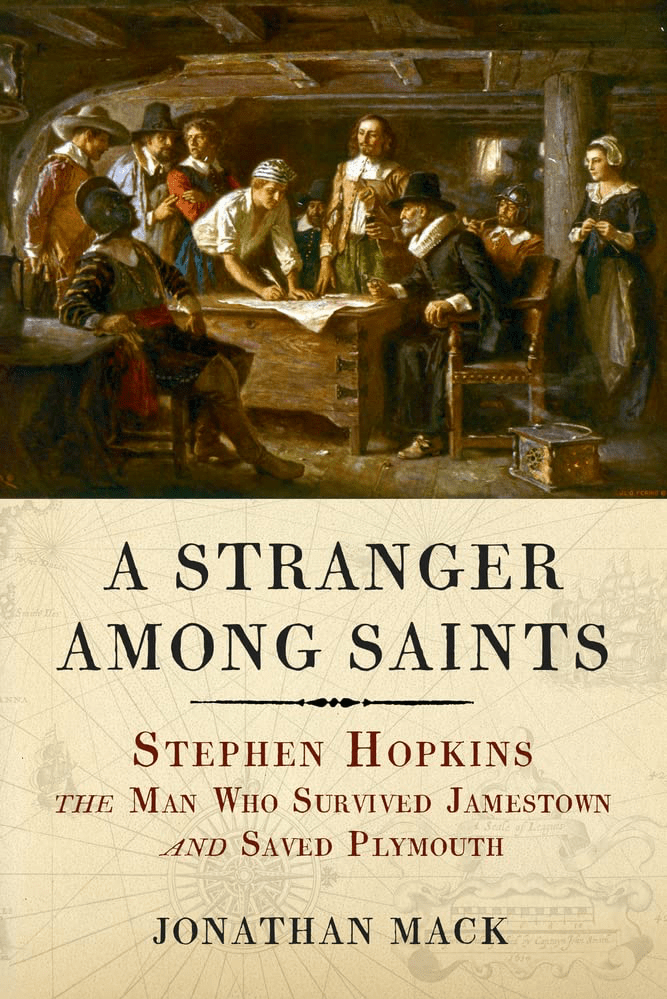
This blog will not, in any way, attempt to replicate the depth of that content. Also, for anyone who is a knowledgeable Mayflower researcher or descendant, this is not meant to add new facts to the story. This blog is simply meant to tell the story of a determined immigrant ancestor of mine who is also one of the most unique and ‘arguably’ most influential passengers to sail on the Mayflower. You might think that describing Stephen Hopkins in this way is simply being a little bit biased. Hold that judgement until you are finished reading and then I’d love to hear your two cents.
Stephen Hopkins was born and baptised in Upper Clatford, Hampshire, England in 1581. Stephen was reasonably educated for the times because in 1609, —with an adventurous and ambitious spirit and an opportunity to greatly improve the prosperity of his family— he joined the Virginia Company as a minister’s clerk to Rev. Richard Buck. This role required him to perform readings during religious ceremonies, among other duties. Leaving his wife Mary and three young children, Elizabeth, Constance (my 9th ggm) and Giles back home in England, he boarded the ship ‘Sea Venture’ on a supply mission to the flailing Jamestown colony in America. (Note: Yes folks there was another colonial settlement in America before Plymouth.)
Well Watered Democratic Seeds & Evading the Noose
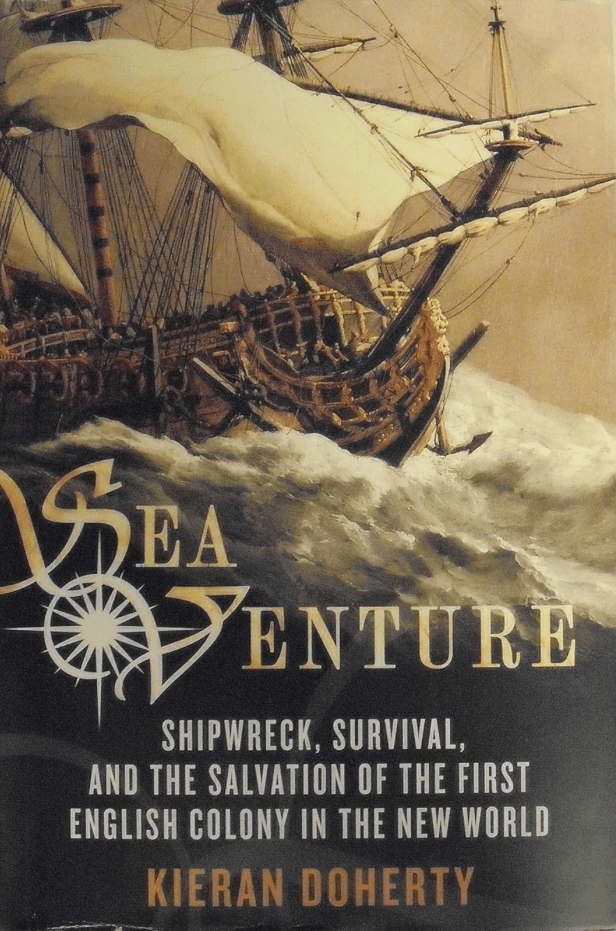
The Sea Venture was the largest of nine ships carrying food and supplies for the destitute survivors of Jamestown. The ship was blown off course in a hurricane and became ship-wrecked on the island of Bermuda. They were stranded there for 10 months, and during that time Stephen was charged and convicted of mutinous behaviour for leading other passengers to demand that they stay in Bermuda vs proceeding to Jamestown. (Note: Stephen’s claim was that the future Jamestown Governor, Sir Thomas Gates, who was travelling on the ship with them, only had authority over the people when they arrived in Jamestown and the Admiral of the Fleet, Sir George Somers, had similar authority only when they were on the ocean. Since neither were currently in either of those situations, the people should decide —an early version of democratic decision-making— whether they should stay in Bermuda, a land of milk and honey compared to what they were facing in Jamestown.) The punishment for mutiny was death and Stephen only escaped with his life after he threw himself at the mercy of the Governor —and some of the other passengers, including Minister Buck, pleaded for his life to be spared.
Death & Dying at Home & Abroad
After creating an ocean-worthy vessel from salvaged wood from the Sea Venture and local Bermuda timber, in 1610 Stephen and the rest of the crew and passengers continued their journey to Jamestown. The settlement had just come through “the starving time” in the winter of 1609-1610 in which 2/3 of the settlement had died of disease, starvation or at the hands of the local indigenous community. Things were so bad that there is evidence that settlers resorted to cannibalism to survive. I think all the Sea Venture passengers, and maybe even the Governor by then, wished they had stayed in Bermuda once they arrived to this scene.
Stephen’s wife died unexpectedly in 1613 leaving three young children at the mercy of others to be cared for. It is unknown how long Stephen stayed in Jamestown given that he would likely have been signed up for a seven year term with the Virginia Company. However, he got word of the death of Mary and was given permission to return home early to deal with the situation. We know he is back in England by 1617 and on Feb 9, 1618 Stephen is recorded again in a marriage record, marrying a lady named Elizabeth Fisher.
May Flowers & Unchanged Stripes
In 1620, Stephen, this time with his new wife and children Constance, Giles and Damaris —Elizabeth having passed away already— boarded the Mayflower for a second and hopefully permanent trip to America. (Note: Although the passengers of the Mayflower are often referred to in modern days as Pilgrims —because they were trying to seek religious freedom— there weren’t enough of them to fill the ship so the Virginia Company sought out others who were more interested in the financial/prosperity aspects of the trip. These people were often referred to as the ‘Strangers’ aboard. Stephen was definitely in this latter group.) Stephen was obviously successful enough in 1620 to afford to bring a couple of servants with him on the trip.
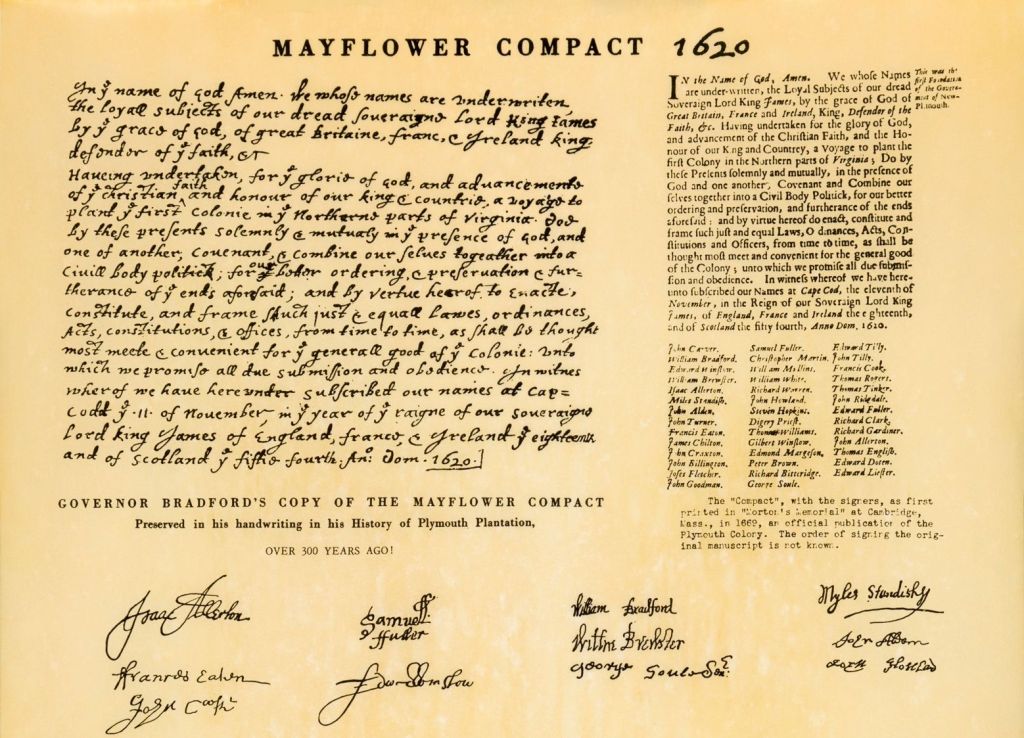
There were several delays in the departure dates of the Mayflower and stormy weather resulted in throwing the ship off course. The delays meant that Stephen’s very pregnant wife gave birth onboard the ship during the journey. They called the child Oceanus, for obvious reasons. He was the only child to be born aboard the Mayflower while crossing the Atlantic. I can’t even imagine what that must have been like. The arrival of the Mayflower off the shores of Cape Cod, versus Virginia Colony where their land charter was authorized, meant another situation where defining who would rule once they were off the ship was rearing it’s ugly head. Given Stephen’s experience with a similar situation in Bermuda years before, he was likely a leading force in pushing for an agreement between all parties before departing the ship. Hence, the now famous Mayflower Compact was signed by 41 male passengers on the ship, including Stephen, on November 11, 1620.
Alternate Facts or Revisionist History
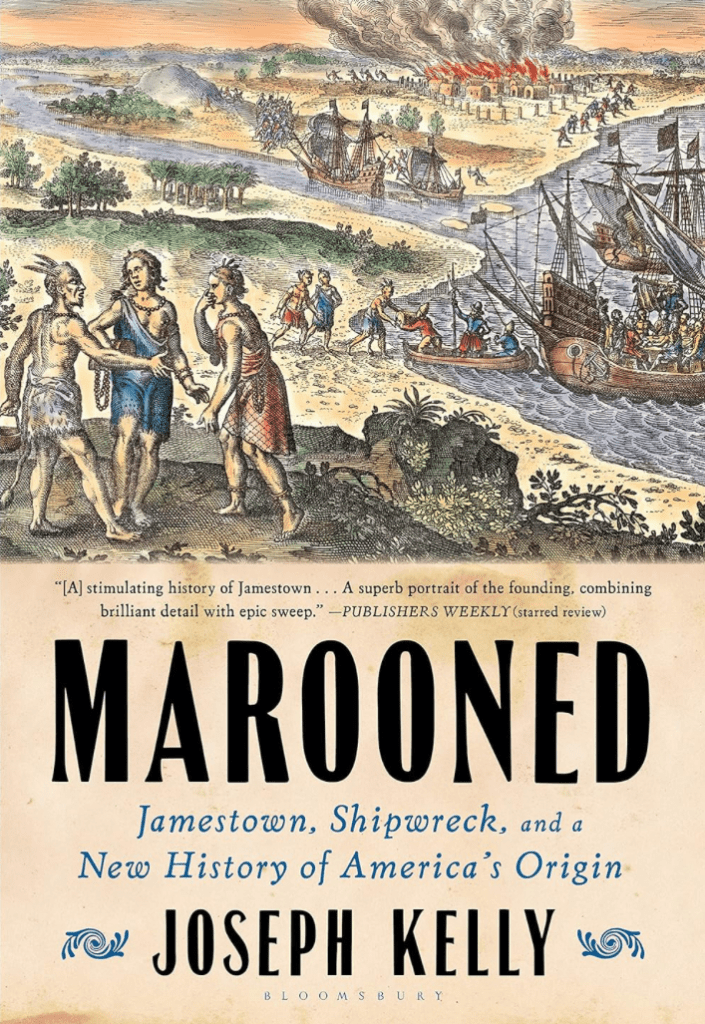
I am currently reading a book called ‘Marooned’ by Professor Joseph Kelly which hypothesizes, among other things, that Stephen Hopkins role in ‘American Democracy’ is quite understated in most Mayflower stories. In fact, Joseph wrote an article for the New York Times entitled “The Thanksgiving Story You’ve Probably Never Heard” which summarizes this theory —in case you aren’t interested in reading a 500 page book. https://www.nytimes.com/2018/11/21/opinion/thanksgiving-pilgrims-puritans-democracy-.html
Giving Thanks For Durable Genes
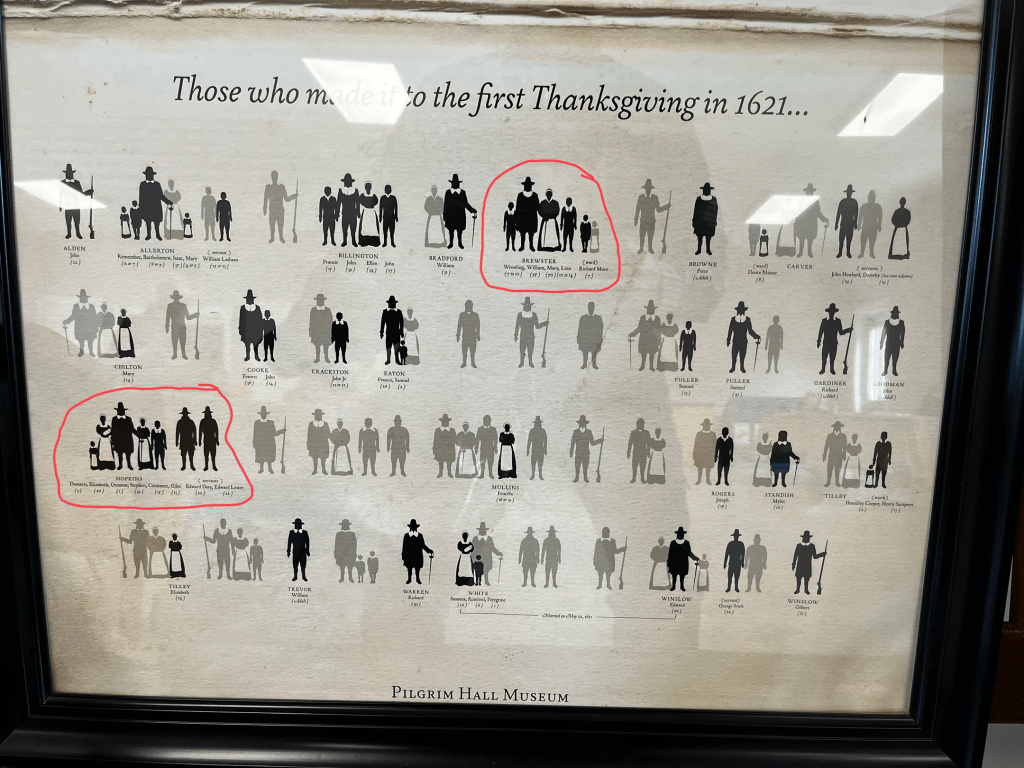
Given the delays in the Mayflower journey, the ship actually arrived at Plymouth in December of 1620. Building shelter and providing food for the new settlers at this time of year was obviously not ideal. After the arduous journey, the winter conditions took a toll on the new settlers and only 50% of the passengers survived the first winter. Luckily, Stephen’s family was one of only a very small handful of families in the entire group to make it through that first winter without death darkening their door. (Note: The Brewsters, my other Mayflower ancestors, were also from similar hardy stock, with only a ward of their family passing away before the first Thanksgiving.) Stephen must have been Very Thankful to celebrate anything after that first year.
Local Guide, Babies & Booze
Because of Stephen’s experience with the indigenous people, language and customs, he was heavily relied upon to help assist the Pilgrim leaders in their early days and years as a colony. However, by the late 1630s his shop serving alcohol in a colony filled with Puritans began to run afoul of the authorities. He died in 1644 a relatively wealthy merchant in Plymouth and left a very extensive will.
Stephen and Elizabeth would have 5 more children while living in Plymouth; Caleb, Deborah, Ruth as well as second children named Elizabeth and Damaris. In total, he had 10 children, 37 grandchildren and about 330 great-grandchildren.
A Shakespearean Comedy & A Drunken Clown
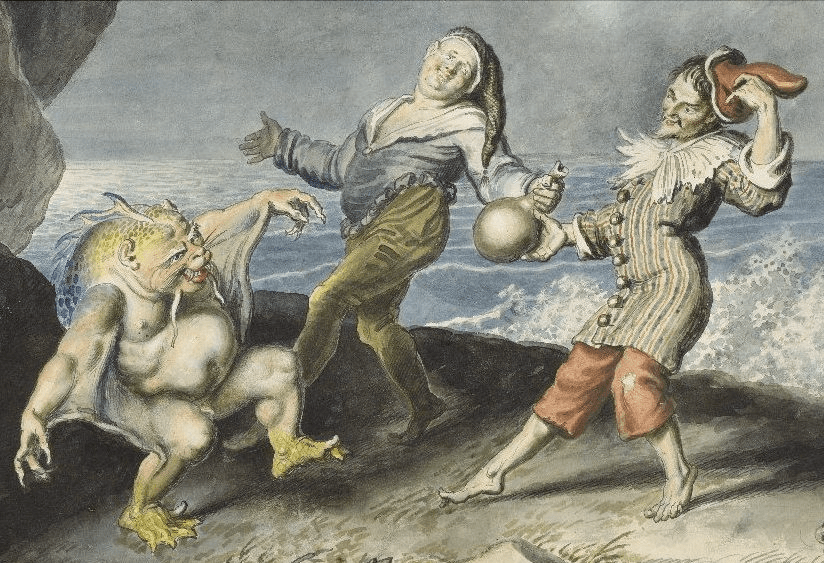
Now you might be thinking, ‘Where does the Tempest come in?’. Well, shortly after stories of the Sea Venture’s Bermuda experience began to reach England —William Strachey wrote extensively about the events on Bermuda and Jamestown and sent them back home— William Shakespeare wrote one of his final plays called ‘The Tempest’ about a ship in a terrible storm, a shipwreck, and a remote island. It is believed that the play was based on the Sea Venture episode and the character in the play named Stephano was inspired by none other than Stephen Hopkins.
Giant’s Steps & New Legacies
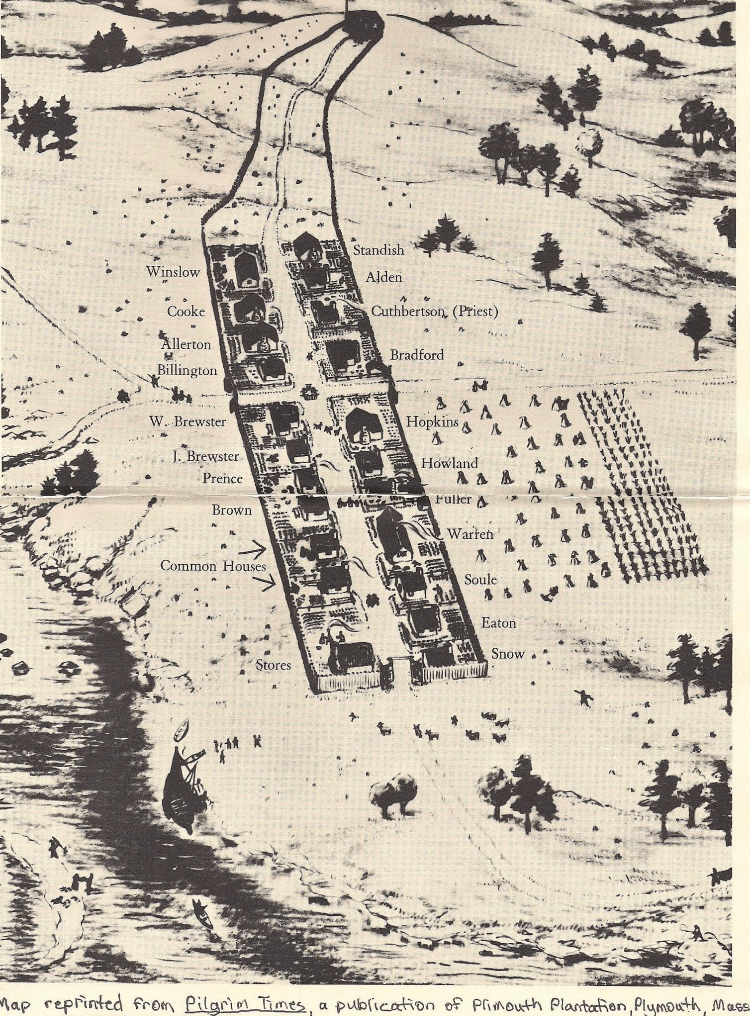
This past summer my wife and I spent a week in Cape Cod visiting the sites and spending time in Plymouth. Visiting the Plimouth Patuxet Museum and walking in the footsteps of my ancestors was an amazing experience. I am not sure Stephen Hopkins and William Brewster, who once lived across the street from each other —as depicted in this 1620s era map— could ever have imagined 400 years later their ancestors would combine to produce so many offspring across the globe, including Newfoundland.

To have a story like this not be passed down through the generations is kind of mind blowing when you think about it. This was the first time anyone in our Cohoon line of the family had submitted proof of this Mayflower link. It took me an application of 150 pages of Birth, Marriage and Death records covering 400 years to prove the connection to Stephen Hopkins (and William Brewster) but it was well worth the effort in order to be able to pass the knowledge down to future generations. I am now the Treasurer of the Canadian Mayflower Society.
Today, an estimated 35 million people around the globe descend from Mayflower passengers.
Postscripts & Poems for the Visual Learner
Author Caleb Johnson, on a recent presentation organized by The Mayflower Society, referred to Stephen Hopkins as the ‘Forrest Gump of the 17th Century’. Involved in the discovery of Bermuda, the replenishing of Jamestown, settling of Plymouth, knew Pocahontas and Squanto. His words, not mine!
If you’d like to watch a brief video of the story of Stephen Hopkins, check out the video below:
A brief visualized poem about Stephen Hopkins by genealogist Pam Eaton:
Photos and article © 2024 Bob Power unless otherwise attributed.
 Polynose Genealogy
Wow! As you say, you couldn’t make this up. Some more books for the reading list.
Bob
LikeLike
Bob,
Thanks for taking the time to read and comment. Stephen was an incredible character. I would have liked to be a fly on the wall during that time period, but maybe not have lived through it. Those were extremely challenging times to live through.
Thanks for subscribing. I have many more stories to be told. I’ll be writing about one of my favourite ancestors in the coming week as I try and catch up post vacation.
Regards
Bob
LikeLike
Bob,
I was doing a family tree for a cousin and one of their ggg grandfathers was an officer with Admiral Nelson at the Battle of Trafalgar. His son was an officer on the Franklin Expedition. There was a picture of him in National Geographic magazine Sept. 2023 (I think).
I am looking forward to your future stories.
Bob
LikeLike
Wow! Thats fascinating. It’s amazing the back stories of people you could meet on the street. That’s what I love about genealogy.
Bob
LikeLike
WOW. 150 pages of BMD records! Great job on that hard work and dedication. Amazing.
LikeLiked by 1 person
It was a labour of love for sure! Was glad when I finally put a bow on the application for sure. 😬
Thanks for reading my blog.
LikeLike
Interesting history. Thank you for the work.
LikeLiked by 1 person
Geraldine, Thanks for reading my blog. It’s much appreciated. Feel free to subscribe so you get notified when the rest are posted.
Bob
LikeLike