This week’s 52 Ancestors prompt of ‘Witness to History’ is another challenging one for me. I know, this is becoming a common comment for me, but at the end of the year, hopefully you’ll see why. There are just so many ancestors that I could write about that would make for interesting reading. However, many of the individuals came from a time period when there were no photographs or national or international media coverage of the events. One ancestor’s story really makes for a well documented witness to, or rather ‘participation’ in, an amazing historic event during “The Golden Age of Flight” in 1927. And the story I’d like to share with you is of my great-great uncle George F. Mackey (1875-1950), and his wife Caroline (O’Driscoll) Mackey (1870-1946), and the urgent assistance they provided to one of the most famous cross-ocean aviators of their era, on an emergency stop-over in the Azores.
Accidental Landing
This story is not one that would be classified as ‘Family Lore’, as I only accidentally landed upon it years ago when I was researching my uncle George’s history online. I came across a Time magazine story from 1927 entitled ‘Wingless Victory’ and it mentioned a George W. Mackey and his wife . It contained just a single paragraph about the Mackey involvement in the story. And was George W. the same as my George F. I thought. Obviously it intrigued me to search for more. A few years later, I found online photos in the Henry Ford Collection at the Smithsonian Museum that brought me more intimate corroborating proof of the story. Next, as more and more newspaper archives came online over the years, especially newspapers.com, the finer details of the story have come to the surface about this historic event. And believe me when I tell you there are reams of newspaper stories about this event. (Note: in re-reading one article this week I realized there was also video footage of the event as well. More on this later in the story.) And finally, as I mentioned in last week’s blog post, I have a LOT of old family photos. With all of this documentary background, I could now make sense of some of the unmarked photos I have in albums in my personal collection by putting faces to names and adding more colour to the story.
Young Men with Ambition

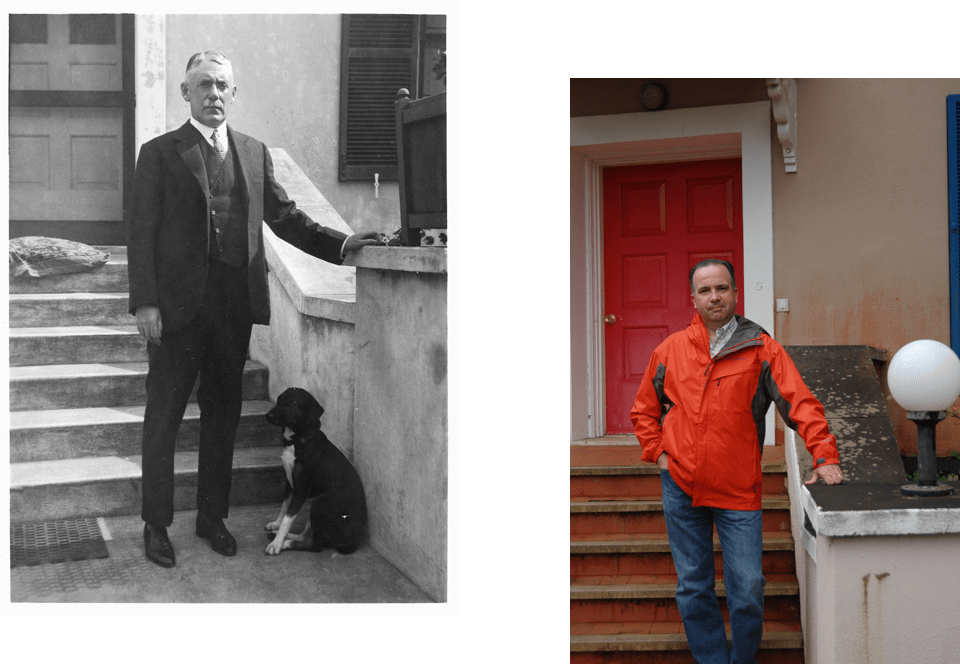
My Uncle George Mackey was born in 1875 in Valentia, Ireland (termination point of the Transatlantic Telegraph Cable between Newfoundland and Ireland). The eldest son of a telegraph pioneer, he also followed in his father’s footsteps and became a telegrapher at the local station in Valentia as a teenager. Being a talented and ambitious young man, he set out from Ireland with his two younger brothers, my great-grandfather Robert and my great-great uncle John, in the early 1900s to set up new telegraph stations in the Azores for the German Cable Co. and Commercial Cable Co. In 1901, in Horta (capital city of the island of Fayal, Azores), George married Caroline O’Driscoll, also from Valentia, the daughter of a wealthy Irish merchant and agent for the Knight of Kerry. Their marriage was one of the first non-portuguese marriages to occur at the Catholic Church in Horta. After several years living in Horta, George and my great-grandfather, both went their separate ways in the telegraph world with George spending time in Vigo, Spain, London, England, Bay Roberts, Newfoundland, New York City, and Miami, USA before returning to the Azores to open a new telegraph station for Western Union in 1924. At the time of the 1927 events, discussed below, George was the Traffic Director/Superintendent for the American telegraph company, Western Union (WU) and the Italian telegraph company ItalCable in Horta. George and his wife lived in a grand company-provided house on the top of a hill overlooking the Western Union property, the Horta harbour and the volcanic island of Pico. (Remember this for a later part of the story). George and Caroline were never able to have children so they had a lot of space in this grand home, with only two people and servants living there. I visited Horta in 2012 and can attest to the size and setting of the house. (See photo below)
Golden Age of Flight & Accidental Landing #2
Now to the story. Many people who are familiar with early aviation, and more specifically non-stop flights across the Atlantic ocean in the year 1927, will immediately think this story might be about Charles Lindbergh. Mr Lindbergh, after all, is famously remembered for the first nonstop solo flight across the Atlantic Ocean in May 1927. While my Uncle did meet him as well, that didn’t happen until 1933. If I said the person was female, without thinking of the year, you might think Amelia Earhart. After all, she is the most famous female flier of all-time. However, her first flight, as a passenger, happened in 1928 and then solo in 1932.
However, before there was Amelia, there was a young lady named Ruth Elder. Ruth, or as the media liked to call her “The Flying Flapper” and “Miss America of Aviation”, was a beauty queen, a pioneer of aviation and eventual actress and global celebrity. Born Sept 8, 1902 in Alabama, Ruth Elder was the first woman to attempt a transatlantic flight with her co-pilot George Haldeman on Oct. 11, 1927, just 5 months after Mr. Lindbergh. Key word in that sentence would be ATTEMPT!
Flying across the Atlantic Ocean in May, like Lindbergh and Earhart, is one thing. Flying in October like Elder, made for many more weather complications. After some weather delays, Ruth and George finally took off in their plane, named American Girl, from Roosevelt Field on Long Island, New York for their flight to Paris. Instead of taking the same route as Lindbergh, they decided to follow the longer shipping route in case they ran into trouble and needed to be rescued. This was a fateful decision on their part. The two had flown their small aircraft for 36 hours over the Atlantic when suddenly it lost oil pressure. After several hours of searching for a ship, they sighted the S.S. Barendrecht, a Dutch tanker, below and dropped messages wrapped around a spark plug asking, “How far to land?”. One message landed on the tanker’s deck.
Crewmen aboard the vessel cleared part of the deck and painted the reply that the nearest land was 350 miles away at Cape Finisterre, off the coast of Spain. It was too far, the two fliers decided, so Captain Haldeman landed the plane in the sea and a small boat rescued Ruth and her co-pilot. The crew had planned to salvage the plane by bringing it on board after the passengers had been rescued, but a fire and two explosions underwater caused the plane to sink. The salvage effort was abandoned. The tanker, after communicating the rescue to land and the Associated Press communicated it to the world, proceeded to the closest Portuguese island of Fayal. (Note: Some news reports of the event actually wrote that American Girl had landed in Holland, confusing the name of the ship with the name of a town, Barendrecht, in the Netherlands. Talk about broken communications in the days of telegraph and ship to shore radio.)
First ‘Impressions’
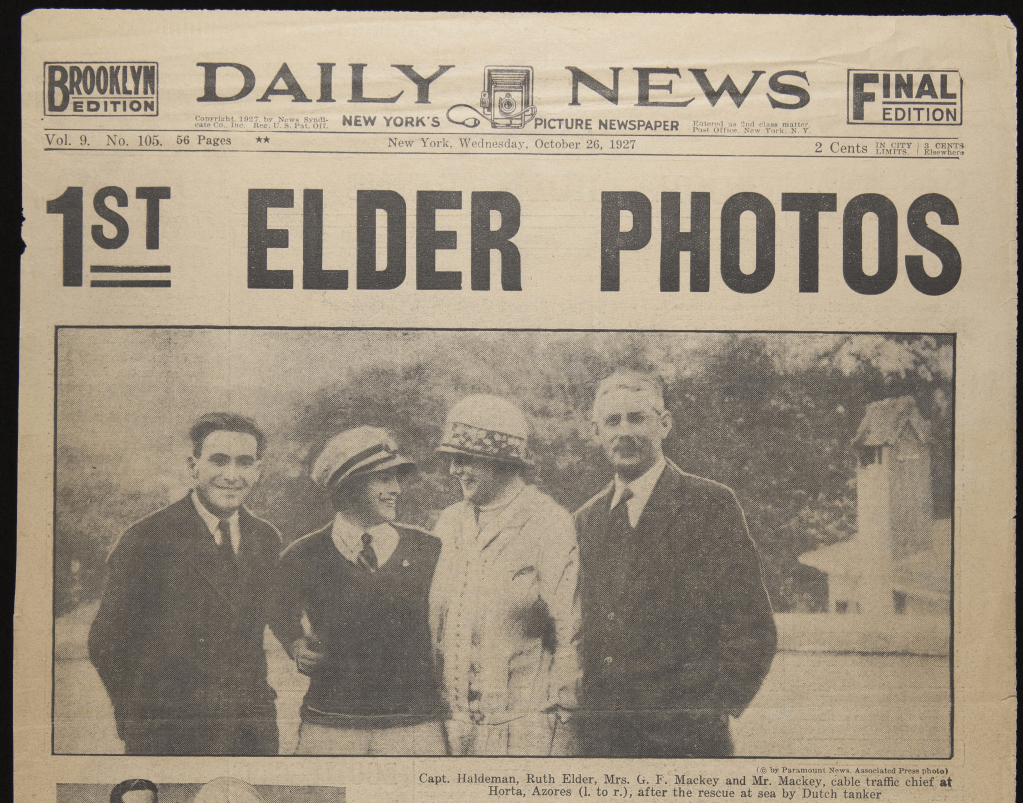
Given the significance of the accomplishment, new overseas flight record by a women of 2,623 miles, the fact that it was an unsuccessful attempt did not seem to matter to the press or the people of Fayal’s capital, Horta. The entire population of the island seemed to come out to welcome the couple of aviators. The first officials to meet the pair were Sen. Fernando da Costa, the Governor of Horta, and George Mackey, Western Union Superintendent. And of course, United Press photographers were there to capture the moment especially for the American customers.
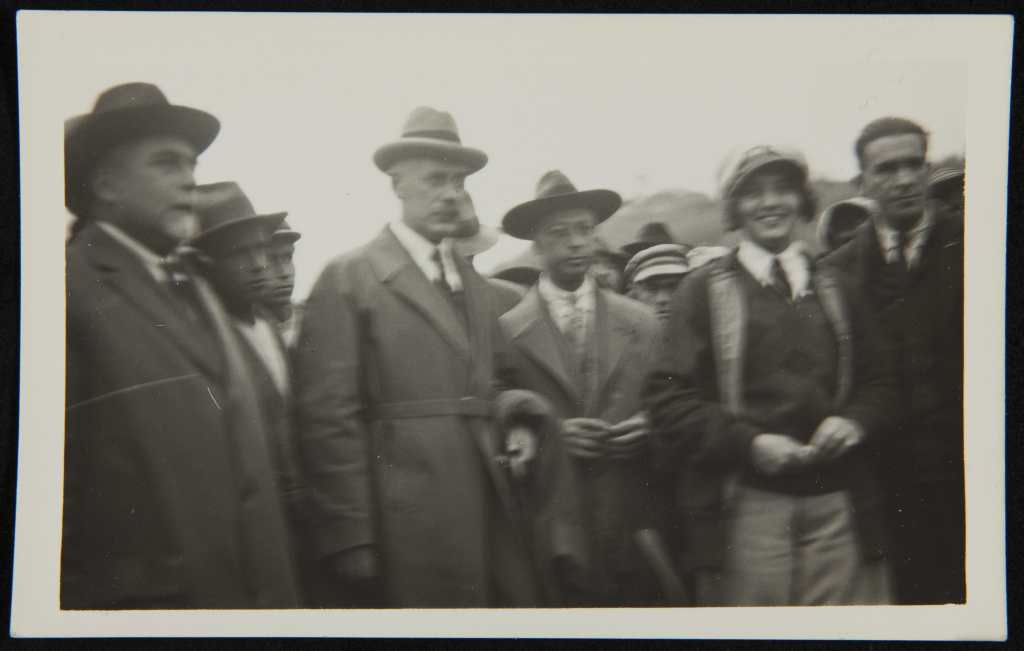
In fact, the cruise liner SS President Wilson of the Cosulich line was authorized by the president of the company to change course by 300 miles just to pick up the first still and video images of the famous aviators. The first photos to reach America were of George and Ruth standing with Caroline and George Mackey. Landing in this foreign land was not part of the plan for Ruth and George when they took off from NY so ‘now what?’. In a Portuguese island with limited English speakers, except for the foreign telegraph company employees, where would celebrities like them stay. I figure that was all worked out before their arrival.
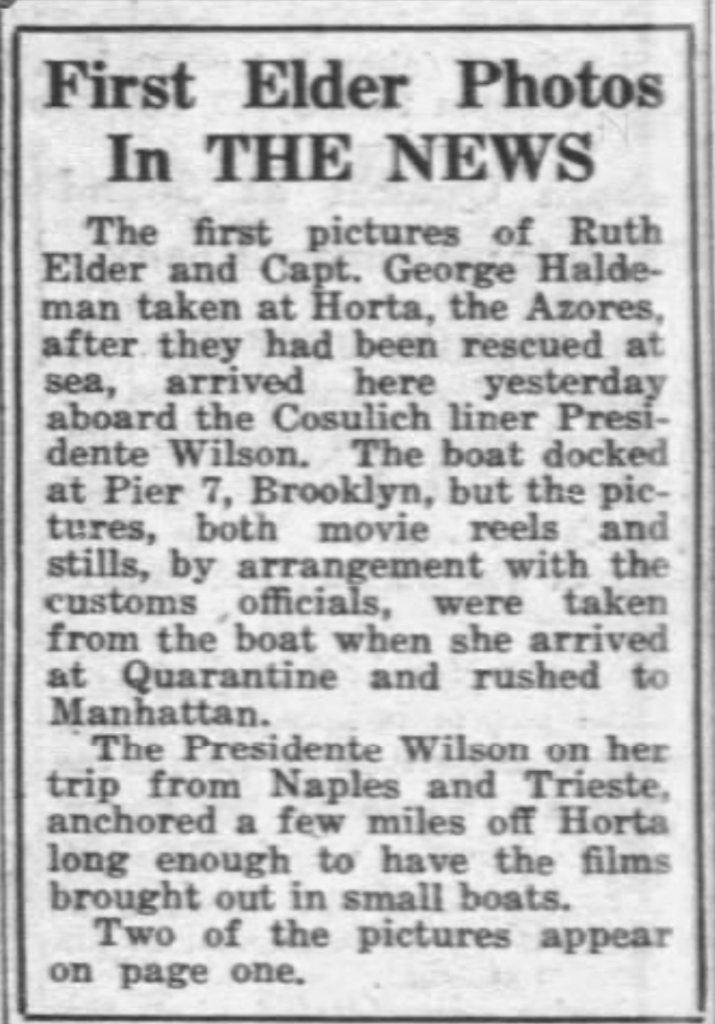
Although an Irishman, my Uncle George, the head of the largest American company on Fayal at that time, Western Union, was to host the tired aviators at his home on the Western Union property. Now, while I say tired, and surely they must have been after flying 36 hours straight plus the trauma of almost crashing the plane, they must have been rejuvenated after their sleep on the ship…and happy to be on dry land. Because, according to the Time magazine story, upon arriving Ruth exclaimed, “I have nothing to wear but the clothes on my back but I hope some kind friend will rig me out.” Later, she replied “indeed not” when asked if she were too tired to dance. More about being ‘rigged out’ later. (Note: Silent video of the events can be seen here:)
‘Air’ B&B for the Flying Duo

While you couldn’t quite book these type of accommodations over the internet in 1927, the two aviators were treated to a full service Bed & Breakfast experience at my Uncle George and Aunt Cara’s house. And of course, just like celebrities of today, ever detail of their stay was reported on with accompanying photos to enhance the story, including this cropped photo from an American newspaper, highlighting “Where Ruth Elder Stayed”. I took the colour photo of the house below, which is now part of a hotel, while on a family vacation in 2012.
Ruth’s personal description of the house, which was included in numerous newspapers back in America, said “Mr. And Mrs. Mackey’s home is situated in a hilltop overlooking the bay. One would love to spend a long vacation there with nothing to do except to enjoy the beautiful scenery.”

The press even highlighted the breakfast served the morning after the first sleep in their temporary accommodations. “Arising soon after 10 o’clock she had breakfast of cornflakes, pineapple and bacon. Then she said she felt fit…but while drinking tea she compared it with the powerfully brewed tea aboard the tanker Barendrecht. When she took tea on the Dutch vessel she always asked for a cup of hot water with each cup of tea — it was so strong.” (Personal note: my grandfather Mackey was known as the “Cornflake King” so maybe he got this from his uncle’s breakfast habits…not to mention the strong tea which has definitely gotten passed down.)
A Custom Paris Dress…Material for 2!
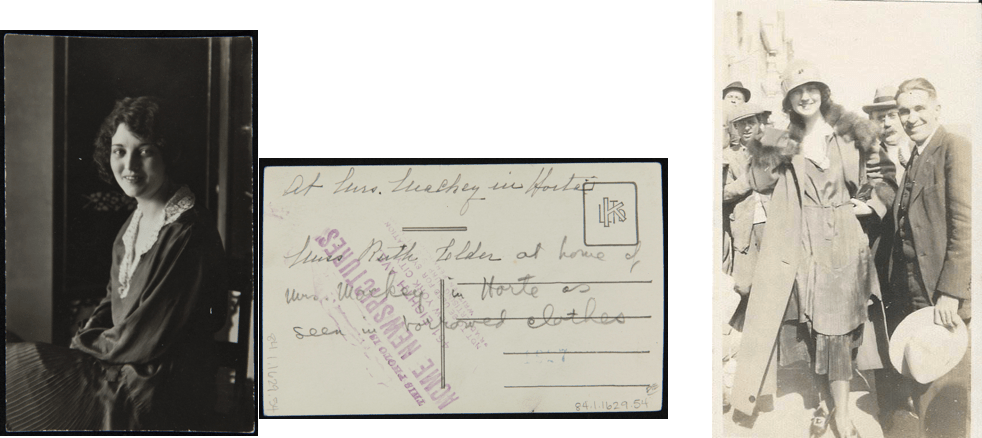
When Ruth was asked why she wanted to make the flight from NY and ending in Paris, she exclaimed two reasons: “1) I want to be the first female to fly non-stop across the Atlantic ocean and 2) I want to buy a Paris dress in person of course.” Little did she know that the next Paris Dress she would wear would be a borrowed Paris gown from someone her mother’s age, with enough material to make two for Ruth.
Now back to the comment of “some kind friend to rig me out”, Time magazine reported, “Mrs. George W. Mackey, wife of Western Union Traffic Manager Mackey, lent Miss Elder an evening gown for a reception in her honour. A newspaper report stated “Miss Elder again was wearing her borrowed Paris gown with perfect ease, apparently unconscious of feminine dread of an ill fitting gown, the dress being much too large for her”. Another report stated that Ruth, “at dinner today…she was gowned in a fashionable Paris creation, from the wardrobe of the hospitable Mrs. Mackey. But it had to be tucked in to fit her slender figure.”
Irish Hospitality
My grandfather always talked so kindly about his Uncle George. In fact, George became a father figure to my grandfather when his Dad (George’s younger brother) passed away unexpectedly in 1924, my grandfather being just 18 years old. So when I read about Ruth’s experience during her stay at the Mackeys, I was not at all surprised.
Ruth and George were at the Mackeys from Saturday Oct 15th in the morning until the following Monday evening Oct 17th. In an article that Ruth personally wrote, she spoke glowingly about the ‘Irish Hospitality’. She wrote “Every minute in the home of these wonderful people was thoroughly enjoyed. They are Irish, and when one has said that, one has said enough. Kind hearted, hospitable, jolly and gay, always smiling, forever in a good humour. They are the kind of people I love.”
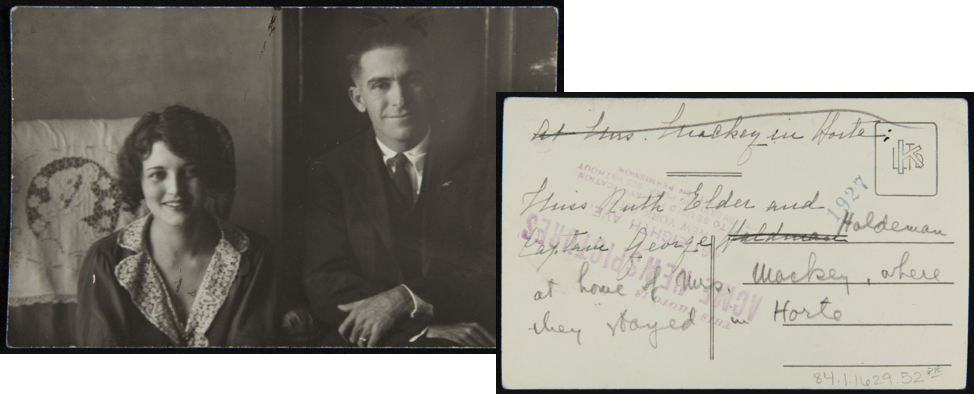
The first morning was taken up with exchanging telegraph messages with friends and family. With Mr Mackey being the Telegraph boss for Western Union, this was easily taken care of. Later in the afternoon, tea was served at the British Consul’s home with Mr. and Mrs. Skey. On the first evening of their arrival, after dinner a small group of Mackey friends dropped in after a nice dinner and all had enjoyable evening together. On the second night, after being outfitted with a Paris gown, “the Mackeys entertained their guests at an American and English gathering at their home. It turned out to be an elaborate affair and music and dancing was enjoyed throughout the evening.” Ruth danced the night away, including dangerously so along the high wall around the Mackey residence with an English gentleman. (When I visited Horta in 2012 a very old man told me this story about dancing on the wall and it was highlighted in the papers as well.)
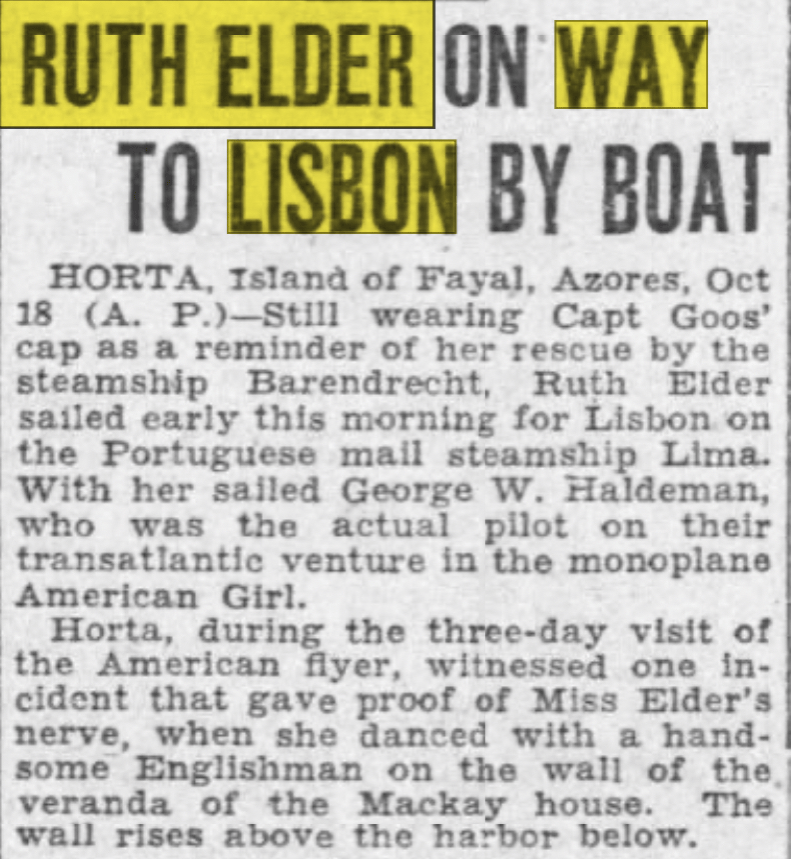
“Later Mr. Mackey sang several old Irish folk songs. At a late hour, after the guests had departed, we retired to our beds. We were tired and happy after an evening of very pleasant entertainment”. The party ended around 2 am according to newspaper accounts. (In earlier research into my Uncle George I found that back in the late 1800s, newspapers back in Ireland highlighted George Mackey’s singing talent which was often put to good use at fundraising events in the area, so it was no surprise to hear about him singing to the American aviators.)
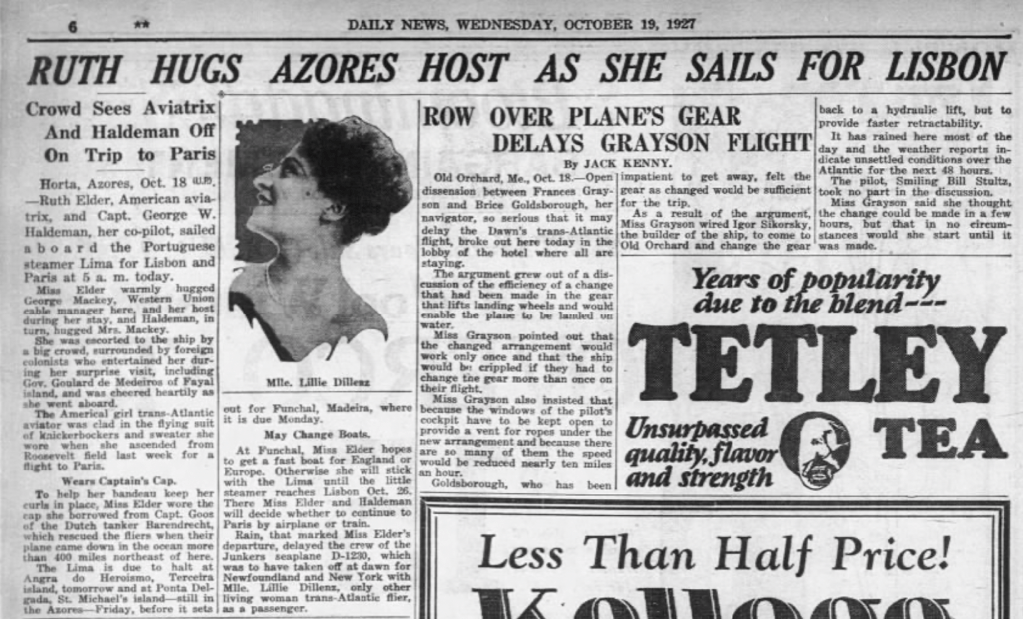
On Monday evening Oct 17th, the two aviators left Horta on a ship ‘Lima’ taking them to Lisbon to continue their journey to Paris. Ruth and George’s display of affection to their hosts, on departing, was proof that they had thoroughly enjoyed their Irish hospitality. Although I have no proof, I would assume that there was likely correspondence between the parties after the aviators’ return to America. Regardless, a long fall weekend made for a whale of a tale to tell others for years to come.
Connecting the Generations – 80+ Years On
My mother, a Mackey, grew up in Horta until her teenage years. So, after years of hearing so many stories about the place, I visited with my parents, my Aunt and her husband and my cousin, in 2012. We thoroughly enjoyed the visit. The photo on the right below was taken during the trip, in the same spot as the one of George Mackey in the black and white photo.
Post Script: Ticker Tapes and President Dates…with a side of “Real Peach”
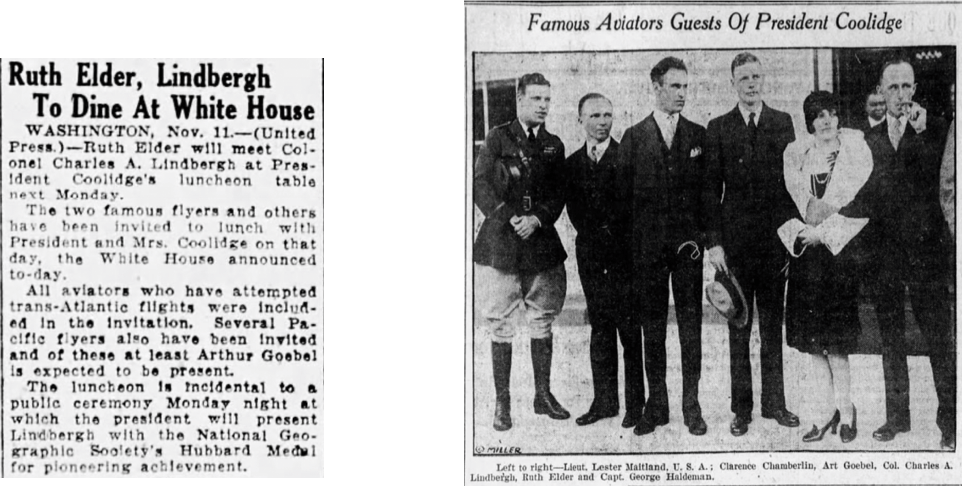
Ruth Elder and her co-pilot eventually arrived back in New York after they had been celebrated in Paris. Upon arrival, there was a ticker tape parade held in New York City in their honour. On Nov 14, 1927 US President Coolidge invited 17 famous American aviators, including Ruth Elder, to the White House for a luncheon. When everyone had arrived, the President famously said “Well everybody’s here, suppose we go eat?” to which Ruth Elder, grabbing the President’s arm, said ” That’s good. I’m hungry myself”. It was at this event that Ruth first met Charles Lindbergh, the inspiration for her flight attempt. Lindbergh called her “a very plucky girl” and, after posing for photos with him, Ruth said to the gathered press “he’s a real peach”.
Note: Only a fraction of the life of Ruth Elder and George Haldeman has been captured in the story. The video below from the Lakeland, Florida (her home at the time of the 1927 flight) library gives a nice summary of Ruth’s life:
Photos and article © 2024 Bob Power unless otherwise attributed.
 Polynose Genealogy